Tuesday, May 04, 2010

Awful old days

A kid showed up at my door selling chocolate-covered almonds. "To keep me off the streets," he said. I bought two boxes, because that's my weakness. The streets.
When I was a kid, that was where I wanted to be. That was where I was. In the summer, on my bike, 10 or 11 years-old, finding new neighbourhoods. I'd bike around until I found a bunch of kids my age or older, call them some names, like "fatso" or "wheezebag", and then let them chase me until they got bored. Sometimes I'd wheel around their block again, if I couldn't find any other action. I never got caught and I never worried about what might happen if I did.
One time, some kids nearly had me, I think they might have been faster than me. But I was in my own neighbourhood, and I just tore up onto the lawn of a family I knew and started screaming until Mrs. Leversoll came out and chased the other kids off. Of course, I knew where to find them again.
Charlie Drabinsky was two years older and went to the same school. He grew up around the corner from me and we'd known each other as long as either one of us could remember. There weren't a lot of kids on his street, so he had to come over to ours, and we were all younger and smaller than him. Sometimes we looked up to him, because he was older and faster and stronger. It bugged him, though, to have to hang out with us younger kids all time. Like it was great that he could be his own team against three or four of us in football on the lawn of the apartment building across the street, and it was great that he could always beat us. But no one ever through a touchdown pass to him. No one ever gave him a high-five when he scored. He was with us, but he was apart.
At school, especially later on, he didn't say much to me. The first little bit on the bus in the morning, he'd be friendly enough. I'd say, "Hey Charlie! Did you catch that Jays game last night?" and he'd say, "No, I wasn't wearing my mitt."
I'd laugh, not sure if I was supposed to. And then the bus would pick up the Sawatsky kids and Frank, the oldest, would sit with Charlie at the back of the bus and they'd both ignore me. The kids at school who weren't from the neighbourhood called him Charles, and eventually everyone called him Charles. He stopped knowing the entire spoken intro at the beginning of The Six-Million-Dollar Man. He stopped taking me on bike rides out past the university, to wild, overgrown riverbank. He stopped telling me I was all right, "for a total nincompoop." He stopped being Charlie and started being Charles.

mp3: "Caravan of Love" by Arabesque

Tuesday, February 23, 2010

And then Lois says, "You've got me. Who's got you?"

Look, I need to say upfront that Lex Luthor is a genius. An evil genius, sure, but nobody's perfect.
So when some guy on the Internet says that Christopher Nolan is the wrong guy to revitalize the Superman movie franchise, I say to myself, well, that guy's no Lex Luthor.
When news broke that Nolan had been hired to shepherd the Man of Steel back to glory, I wasn't thrilled, but not because I didn't think he was up to the task. My worry is that the silver screen version of superheroes could become as homogenized as their comic book counterparts.

TANGENT: This condition was institutionalized at DC Comics last week with executive shuffling that names Geoff Johns Chief Creative Officer. As recently as 2004, you could find a wide array of storytelling in the DC Universe. You had the moody police procedural of Gotham Central, the anything-goes super-soap opera of the early run of Superman/Batman, and the fearless cartooning of Kyle Baker's Plastic Man. If you bought an issue of Detective Comics starring Batman and an issue of The Flash, you could count on each comic having its own tones and rhythms. Then, beginning with Identity Crisis and continuing on from Johns's well-intentioned disaster Infinite Crisis to his current thuddingly-dull Blackest Night, the whole line became this dour, depressing series of catchphrasing and limb-rending. END TANGENT

C. Robert Cargill, however, thinks that, much like Lori Lemaris, Nolan is "wrong, wrong, wrong" for Superman. And he was kind enough to break it down to five reasons, all of which are based on the pretty insulting assumption that Nolan only knows how to make one kind of film. As if a Nolan-driven Superman movie will feature Jor-El and Lara taking Kal-El home from the opera when all of a sudden a man comes out of the shadows and blows up Krypton, unwittingly giving birth to Superman's neverending war on opera.

1. According to Cargill, "Superman ISN'T a dark hero." Really? He's the last survivor of his entire species. If the deaths of millions, probably billions, of people and the destruction of an entire planet isn't a dark subject, what is? Batman lost his parents and became a pouty creature of the night. Superman lost his whole freaking planet. Brood on that, Bats.
2. "Superman isn't a detective," says Cargill. No, he's just a reporter for a major metropolitan newspaper. Nothing sleuthy going on there, no sir. Especially not from that very un-detective-like Lois Lane, who, as a nervy dame with a nose for news, never finds herself in over her head in situations that might as well be lifted right out of the noir textbook. Nope, nothing like that to see here. And since when is Nolan a detective filmmaker? Batman Begins and The Dark Knight succeed largely as science fiction films dressed up as crime thrillers. Certainly The Prestige is full on sci-fi, and at its heart, so is Memento. The Prestige and Memento are both exactly the kind of stories that used to feature in Superman comics back when Superman was the most popular fictional character on the whole planet. Thanks to his frequent contact with futuristic sorceresses and Red Kryptonite, Superman was always losing his memory or discovering imperfect duplicates of himself.
3. "They're throwing out the current continuity," Cargill mentions. I actually can't find any reference to Nolan in this "reason why Nolan shouldn't oversee the new Superman film", so I'm tempted to overlook it. Also, because it's a stupid reason. Also, because hopefully filmmakers will recognize that they've been telling Superman's origin for the last 10 years or so on Smallville and just tell a good Superman story.
4. "Nolan is great on story, but terrible on staying true to its history," Cargill claims. By now, I'm not sure if Cargill has ever seen a Christopher Nolan film, or any film at all for that matter. Nolan, like Tim Burton before him, excels at creating style and atmosphere, setting an appealing and intriguing tone for his films. The storylines and plots of his films tend to take a backseat to tone and theme. That's not the worst flaw for a filmmaker to have, and it's consistent in his films.
5. "Superman is science fiction," Cargill says. "Nolan is real world." This seems to be the same reason as #2, but what the heck. Cargill's got Nolan here, since Memento, Insomnia, Batman Begins, The Prestige and The Dark Knight were all faithful adaptations of true stories. Cargill notes that Nolan's upcoming film Inception is science fiction, but dismisses it because nobody knows if it will be good or not. Unlike his Superman movie, which Cargill knows will be bad. Cargill also proves that he hasn't seen Superman III in this paragraph, which is too bad, because I think he'd like it.
Stayed tuned for an upcoming post where I'll outline ways that a new Superman movie could be awesome (regardless of who's involved), including my top secret idea for a 30th Century Bromantic Comedy co-starring Lar Gand and Jo Nah.

Sunday, February 14, 2010

It Helps if You Dress Like a Detective: Intro to Crime Fiction

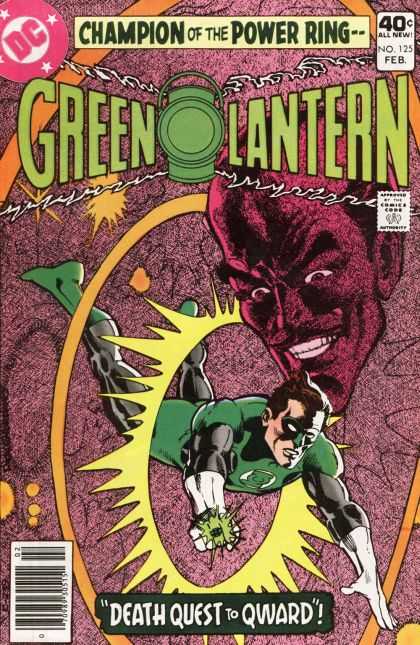
I've always been a fan of crime fiction. I mastered reading on the Hardy Boys novels (and entrenched my fascination with detective work in The Hardy Boys Detective Handbook, which featured a brown colour scheme instead of the usual blue, underscoring its grim purpose) and DC Comics (DC originally stood for Detective Comics, but now it doesn't stand for much at all). When I returned to reading comics as an adult (after a 13-year indifference), I was surprised to find superhero comics generally lumped in with Science Fiction. To me, they had always been detective stories, four-colour morality plays of crimes punished and justice avenged. Even the more glaringly sci-fi stuff like Green Lantern featured readily identifiable elements of crime fiction.
Sure, I was into Star Wars as a kid, but my Sci-Fi/Fantasy interest didn't go much further. On my bookshelves today, non-comic book Sci-Fi appears infrequently. I have some Soviet Sci-Fi, a novel written by a Regina author, and Jonathan Lethem's Gun, With Occasional Music, if that even counts. The Yiddish Policemen's Union won a Hugo, but, hey, come on, that's a crime novel.
Richard Price talks about how he uses the act of investigating a crime as a means of taking readers to place they otherwise wouldn't have access to, be it the tenement courtyards of Clockers or the condo-converted synagogues of Lush Life. The investigation of a crime, especially a murder, is a distorted reflection of the way fiction writers work: building files on their characters, coming up with plausible scenarios and then breaking them down, constantly asking what if, what if, what if? It's no surprise, then, that so many writers use the crime novel as a vehicle to explore larger themes than merely whodunnit, and that there are so many terrifically-written crime novels. The first two entries in our series are examples of this socially aware crime fiction.

The Story of a Crime: The Martin Beck Series by Maj Sjöwall and Per Wahlöö - This ten-book series is the big daddy of Scandinavian crime lit (Henning Mankell, Stieg Larsson, etc) and colossally well done. Hyped by Michael Connelly and Michael Ondaatje, this is straight-up police procedural at its finest, but also remarkably potent (but never polemic) social criticism. Before they started this series with Roseanna in 1965, married couple (and affirmed Marxists) Sjöwall and Wahlöö worked in poetry and journalism, and the skillsets of those two trades are used in perfect harmony here. Witness:
Ten yards away stood a lone dismal figure, a pipe in his mouth and his hands thrust deep down in his coat pockets. This was Fredrik Melander of the Murder Squad in Stockholm and a veteran of hundreds of difficult investigations. He was generally known for his logical mind, his excellent memory and unshakeable calm. Within a smaller circle, he was most famous for his remarkable capacity for always being in the toilet when anyone wanted to get hold of him. His sense of humour was not nonexistent, but very modest; he was parsimonious and dull and never had brilliant ideas or sudden inspiration. Briefly, he was a first-class policeman. (from The Fire Engine That Disappeared)

As you can probably tell from that passage, Sjöwall and Wahlöö were not interested in supersleuths or tough guys. American crime fiction is full of disenfranchised mavericks, often working in competition with the authorities, even when they themselves are members of a police force. It's that rugged individualism of one man against the world, or at least the system. But the detectives in the Martin Beck series are presented as civil servants, who solve cases not through passion but through process. They wait weeks for lab results, stumble blindly into breaks, sleuth by way of talking to people and reading reports. In between, they go home to their wives (the books were published between 1965 and 1975 and reflect an era when there were few women in policing), their model ship kits, and Sax Rohmer novels. The series epitomizes Walter Mosley's idea of the Novel as "a pedestrian work of the everyday lives of bricklayers and saints."

Always Outnumbered, Always Outgunned by Walter Mosley - This is the first of three collections of short stories featuring Socrates Fortlow (the others are Walkin' The Dog and The Right Mistake). Mosley is one of Bill Clinton's favourite writers, and also one of mine. In the Watts neighbourhood of L.A. of the early 90s, we meet Socco, fresh from a 27-year bit in an Indiana prison for the murder of two people. We follow him through his neighbourhood as he struggles to give purpose and meaning to life on the outside. Mosley never shies away from Socrates's darkest parts, and never resorts to sentimentality, all the while creating a remarkably sympathetic portrait of a very hard man. HBO made a pretty damn fine miniseries out of it starring Laurence Fishburne Jr.

Friday, February 05, 2010

Vanhattan? More like Vanhassle!

Last spring, I’m waiting for the #3 Downtown bus at the corner of Main and Broadway. I’m on my way in for a 12-hour shift, on a Sunday, so I’m not in a great mood to start with. The bus, unreliable at the best of times, seems to follow no schedule at all on Sundays. So I’ve got to get out way ahead of time just be on time. I’ve got to hustle like a keener just to keep from being a slob.
But here comes the bus, I can see it way down the street.
During the week, the #3 is like any other bus I’ve ever been on in Vancouver, packed. By the time I get on, no more than ten minutes from the city core, it’s standing room only, usually with the pleasurable view of the sleeve of someone’s wet raincoat. But Sunday mornings before 8, it’s mostly shift workers like me. Security guards in turbans with shopping bags full of groceries from the 24-hour supermarkets, nurses in their colourfully printed scrubs, and the occasional straggler from Satuday night’s revelry. Sunday mornings, I can count on sitting down on the bus.
The bus stops at a red light across Broadway, and I can’t believe my eyes. The digital display reads “Sorry. Bus full.” The light changes to green and the bus carries on in the centre lane.
As it goes by, I see them: Sun Runners, in their T-shirts and shorts. Chipper with their power shakes and lattes. Laughing, ha ha. As I watch the bus make its way down the hill, I quietly pray for rain. Hail, even.
Another bus passes by. As if!
Finally, I get a break. The third bus is no less full, but the driver is at least a reasonable human being.
I edge on to front of the bus sideways, like a Tetris block. I can’t even get in far enough to validate my Faresaver. Upfront we’re elbow to eyeball, but craning my neck, I can see empty seats at the back. Lots of them.
The Sun Runners, these fit folks who ride the bus maybe five days a year—to hockey games or fireworks—are bogarting their personal space. They’re doing stretches in the aisles.
And I’m late for work.


To live in Vancouver is to deal with frustration. If it's not the Sun Run--an annual 10km race sponsored by the city's broadsheet publisher of the New York Times Crossword Puzzle--it's made-for-TV film shoots, infrastructure mega-projects, Victorian-era zoning bylaws, or gang-related shootings. It's not the awe-inspiring natural surroundings that lead so many Vancouverites to yoga, it's the hope of learning to cope with constantly thwarted plans.
The Olympics will just be an extreme manifestation of this essential Vancouverism.
What's saddest about the Olympics as an event--aside from the 800 teachers the province might lay off to help pay for it, or the dozens of innocents who will inadvertently read a Shelley Fralic column--is that visitors are going to miss out on the best parts of Vancouver. Parking restrictions and transit priorities will leave little opportunity for tourists to see what daily life in the Soggy Apple is really like. It won't be impossible, but it won't be easy for the determined to get to the other side of Gastown and drop in on Robert at Solder & Sons, the Downtown Eastside's coffee and books emporium (the coffee is new, the books are used) where you can challenge the regulars to a match of Scrabble, or just hang out with the fixed-gearheads from Super Champion, the bike shop next door. Or take your Americano down the street to Crab Park Fight your way back to the Downtown side of Gastown for a Najib's Special at Nuba, arguably the finest lunch in all of Vancouver. Or, how about Cambie Village? The area paid a dear cost during construction of the Canada Line, and now, in the hinterland between City Hall and King Edwards stops, will they reap any benefit?
Of course, the real best parts of Vancouver have nothing to do with the city itself. Without the bridges, without the SkyTrains, without the souvenir shops, without the people, the mountains and ocean would still be here. There are wild parts of the city, such as the steep banks of the Millennium Line at Commercial Drive, overgrown and lush, that remind us how we've changed the landscape to suit our needs. Raccoons and coyotes, great blue herons even, roam the city streets before dawn. Many progressive agencies in the Downtown Eastside acknowledge the idea that Vancouver sits on unceded Coast Salish territory, and the persistence of these nocturnal fauna is a reminder of our late arrival here.


Gary Stephen Ross, editor-in-chief of Vancouver magazine, wrote an essay on "the idea of Vancouver" for the current issue of The Walrus. It's accompanied by brilliant photos of Vancouver by Grant Harder that capture the range and depth of Vancouver life. Also in the issue, a powerful piece by Marian Botsford Fraser on the Canadian penal system, and a fantastic report on Rush by Jason Anderson. In fact, my favourite part of the issue is on the Contributors pages, where it says that Anderson is working on his second novel, about the Canadian film industry. It's a hell of an issue, you should buy it.
Ross compares Vancouver to Philip Seymour Hoffman, who starred in the film Owning Mahowny, which was based on the book Stung, written by Gary Stephen Ross. Hoffman, you'll remember, also played Lester Bangs in that terrible Cameron Crowe movie about ten years ago, and Bangs, who died in 1982, wrote that The Bells is Lou Reed's best solo LP. Bangs didn't live long enough to hear Mistrial, but I don't think it would have changed a thing. Bob Seger is reported to have written a song about Lester Bangs, called "Lester Knew." Bruce McCulloch definitely did write a song about Bob Seger, called "Bob Seger." It's on his album The Drunk Baby Project. It is also better than anything on Mistrial.

mp3: "Nobody Can Turn Me Around" by the Sojourners
mp3: "Bob Seger" by Bruce McCulloch


BONUS TEN GREAT SONGS 2009 #8: I WANNA KNOW GIRLS
mp3: "I Wanna Know Girls" by Lambchop

Wednesday, January 20, 2010

Ten Great Songs 2009 #6/#7: Easiest Game/Disco Mystic

At this point, moving toward the end of January 2010, who really cares about 2009 anymore? So, like, if I want to put a song that came out at the end of 2008 on my Best of 2009 list, nobody's going to notice anymore. How about a song from 1979? How about a whole album from 1979 that I didn't even hear until 2010? Look, Emmet, if you're still slogging through your year-end list this deep into the new year, well, whatever gets it done, pal.
So that's why I'm telling you about The Bells today. Lou Reed's ninth solo album, released between Street Hassle and Growing Up in Public. When I cared about Lou Reed (and I cared, man, I cared) Street Hassle (1978) was his last good album until New York (1989)--which was his last good album until that one with the song about getting an eggcream. As far as I was concerned, there was a whole decade where if there was a difference between Lou Reed and Joe Piscopo, there wasn't enough of one to matter. It was just a big clusterfuck of red joysticks, original wrappers and drum programs.
Well, if any theme has emerged in the narrative of this blog, it's that I used to have bad judgment (now I'm spot on about everything). So, The Bells.
#1: "Stupid Man" - I can't believe I didn't know that Lou Reed had a song mentioning Saskatchewan until a couple of months ago when I heard this song by accident. If I'd heard this at the right age (13/14) it might've changed the course of my life. Maybe not. I'm kinda glad I only heard it now, when I can relate more to the baby daughter lyrics than to the hitch-hiking out of Saskatchewan lyrics.
Right away you know this isn't typical Lou Reed. The song starts with piano, probably electric, then drums and great disco bass line. Lyrically, this is a country song, it's "Memphis, TN" by Chuck Berry. It's the Prodigal Father, trying to get home where he belongs. Nobody's wired on down, nobody's trying to hit it sideways.
Country lyrics, disco rhythm? This is Lou Reed?
#2: "Disco Mystic" - This is the craziest song I've ever heard. It foreshadows "Druganaut" and "99 Problems" at the same time. It's relentless, it's murder, it's brilliant.
#3: "I Want to Boogie With You" - Whatever happened to rock sax?* The first line here, Lou sounds like Flight of the Conchords doing Bowie. This is the first track on the album where Lou actually sings like Lou a little bit, and it's a laundry list of people who don't like him, people who want to see his ship sink, etc. But he just wants to boogie with you, down on the corner. Because he's Lou Reed, that's where he boogies.
#4: "With You" - This is another Lou Reed put-down song, continuing his late-70s collection of songs where he basically shits on people ("Dirt" and "Leave Me Alone" from Street Hassle, "Temporary Thing" from Rock and Roll Heart, etc).
#5: "Looking for Love" - Like "Boogie" this is a riff on Springsteen (who guested on Street Hassle) and built around rock sax. It's a little more downtown-lyrically, a little more Lou Reed-y, but still sorta chooglin'. I think he kinda sounds like the guy from the Violent Femmes on this one, but I guess it's the other way around.
#6: "City Lights" - Rhodes piano, kazoo and found percussion wouldn't sound as good together again until Royal Trux's 1998 album Accelerator. That alb, incidentally, closes with "Stevie (for Steven S.)" which is a tribute to Steven Seagal just as "City Lights" here is a tribute to Charlie Chaplin, another actor better known for his physical presence on screen than for his ability to deliver lines convincingly.
#7: "All Through the Night" - Especially in the 70s, but probably always, Lou Reed was a great recycler of ideas. Here he uses the same overdubbed snippets of conversation effect he used on "Kicks" from 1975's Coney Island Baby. It's used more precisely here, and all the voices seem to be Lou. We hear other people laugh, but always at Lou's bon mots. He says things like "he didn't age gracefully, he aged overnight" or "the drink's aren't on the house, they're on me!" This is actually the song where he sounds like Gord Gano, but I didn't have a lot to say about "Looking for Love".
#8: "Families" - When I think about Lou Reed's family, I think about "Kill Your Sons" from 1972's Sally Can't Dance. It's his presumably autobiographical song about getting electroshock therapy as a teenager and it doesn't paint a kind portrait of his kinfolk. But this is a letter home with heart. Even though he tells his father, "there's nothing we have in common except our names" he shows some real compassion (not Lou's trademark) and there's a genuine sadness to the refrain "I don't come home much no more."
#9: "The Bells" - The title track, the capital city, THE BELLS. Marty Fogel and Don Cherry skulking horns over a sparingly recurring three-note bassline for 5:30 and then! Theremin and Lou talks some nonsense about when actors leave the stage, "looking out he thought he saw a crook, and he hollered, 'look there are the bells!'" Yeah, sure. It's too bad the lyrics are so whiffy, because Fogel and Cherry have really worked up a terrific free-jazz rock dirge and the song weighs a ton for mood and tone and sometimes you just have to go, "Okay, Lou, go ahead."

I bought the album on iTunes, marking the first time I've owned any Lou Reed in any format other than cassette (not true: I have owned White Light/White Heat on vinyl since October, 1995). Which tells you how long it's been since I really, really wanted to be able hear some Lou Reed when the moment struck. According to iTunes, the top five Lou Reed albums are (in order) Transformer, New York, 1969: The Velvet Underground Live with Lou Reed, New Sensations, and Berlin. The first two seem obvious enough, his biggest hits. The live VU album is an aberration (fine though it may be, esp "What Goes On") and has no business in the solo Lou section. Berlin, I can see, that's a pretty harsh album and people who like Lou Reed seem to go for the harsh stuff, same with Sarah Silverman, y'know? But New Sensations? Why not Legendary Hearts or Mistrial? Why not the one with the song about eggcreams? I guess it means that everybody already has Sally Can't Dance and Coney Island Baby in other formats? It bothers me more than it should. I mean, yes, New Sensations has "My Red Joystick" but it also has "Doin' the Things That We Want To". Mistrial, meanwhile, is wall-to-wall brutal. "No Money Down", "Video Violence", "New York City luh-uh-vers, Tell It To Your Heart!"

*Rock Sax? I'm glad you asked! Andre Ethier's Born of Blue Fog came out very late in 2008 and, just like Lou Reed's The Bells, is easily his best work to date. "Cop Killer", maybe the greatest song ever recorded by a Canadian, isn't a Body Count cover, but it does snatch a line from Jay-Z and it has rock sax, bringing this whole thing full circle. Thank you for coming, buy Born of Blue Fog.

EDIT: As Paul points out in the comments, the lyric to "The Bells" is, indeed, "Looking out he thought he saw a brook," according to Lou's Pass Thru Fire (via Google Books).

Thursday, January 14, 2010

Ten Great Songs 2009 #5: Eid Ma Clack Shaw

If you like concerts, but don't like going out or if you like desks, but hate work NPR's Tiny Desk Concert Series is your new pal. Our old pal Bill Callahan performed just such a concert last summer and it's pretty much the be-all/end-all of internet music videos. Callahan released his second album under his own name a little before, and, as usual, it changed the way we think of Bill Callahan. Callahan's best songs have always been about either birds or trees and on Sometimes I Wish We Were an Eagle, he manages a song that's about both birds and trees. It's the last song on his Tiny Desk Concert.
Other recommended TDCs:
mp3: "Eid Ma Clack Shaw" by Bill Callahan

Thursday, December 31, 2009

Ten Great Songs 2009 #4: All the Money I Had is Gone

Michelle Lang was the agriculture reporter when I started at the Leader-Post in 2001. My job was mainly to sort the mail, archive each day's edition, and tame the wild fax machine. It was the closest thing to an adult job I've ever had. I held on to it far longer than I should have because I was afraid that that was as good as I was going to get in this world. And also because they let me write CD reviews and interview Bruce McCulloch and Bob Newhart and Charley Pride.
By the time I started at the L-P, I'd been writing consistently for about four years for the student press, alt-weeklies, and the odd not-quite-glossy music mag. Among the amateurs and the activists, I thought I was pretty hot stuff. I was quickly humbled at my leftover desk on the edge of a real newsroom, watching real journalists do real journalism every day. I spent the next five years wallowing in a wounded sense of inadequacy that mostly manifested itself in self-sabotage.
Early days, before I resigned myself to a lifetime of fax wrangling, it felt like my lowly position might be a springboard to better things. During that first year or so, some reporters would ask me to help search the archives (before the archives went digital). One day Michelle stopped by my desk and said she'd heard I had the best French in the newsroom.
"That's not saying much," I said. I'd helped translate some French documents once.
Well, Michelle explained, of course I'd heard that such-and-such federal agriculture program was falling apart and the provincial Ag Dept. was publicly considering pulling out or going ahead anyway or something. She knew that Manitoba had already bailed and had heard that Quebec might be too. Trouble was, her French wasn't good enough that she could call up the Quebec Agriculture Ministry to confirm. Would I, could I?
So, with my horribly out of practice French and extremely limited knowledge of agricultural issues, I dialled up the Quebec Ministry of Agriculture. "Etes-vous...?"
I made a transcript and translated it and left it on Michelle's desk. The Quebec Ministry was weighing their options and promised to act in the best interest of their producers. When Michelle got back to the newsroom, she thanked me for my help. It felt great to be challenged and to come through on it. Good work is its own reward, I figured.
The following morning, I immediately opened the paper to the Ag section to see how much ink my little adventure had generated. The Quebec Ministry of Agriculture featured in one tangential sentence in the article, which was mainly about how Saskatchewan farmers were dealing with the mess. At the bottom of the the article, in italics, read: with files from Emmet Matheson.
Damn. I doubt Michelle realized how much that acknowledgement meant to me. For her, the whole thing was routine: you follow through on stories and you give proper credit. That's just good journalism, that's just being a decent human being.
I think everyone who worked at the Leader-Post back then would agree that working there became a little less fun and interesting after Michelle left for the Calgary Herald.
Michelle Lang, along with four Canadian Forces soldiers, died yesterday in Afghanistan when the vehicle they were traveling in hit an improvised explosive device.

mp3: "All the Money I Had is Gone" by the Deep Dark Woods